
Mark Sermon Podcast

In contrast to the celebrated scribes, Jesus draws his disciple's attention to the place where people brought their temple offerings. Their attention was naturally drawn to those making large gifts, but Jesus wanted them to witness something greater.
Jesus pointed to the poor widow's offering as a greater offering in the sight of God, not because of worldly value but because of the heart of worship. From the widow's offering and Jesus' teaching, we find the principles that giving is good, must be sacrificial, and is an act of worship.

Using the example of the lamp I want you to see to fundamental truths about following Christ. When you believe in faith on Jesus for salvation you are forever changed – you are irreversibly transformed. The humble oil lamp demonstrates two ways this transformation changes you - transformed nature and transformed obligation.
Mark Sermon Videos
Select a sermon below to watch messages from Mark.
Loading videos...
Mark Sermon Shorts

When worship falters, it is often because our hearts are looking in the wrong direction. Like whale watchers who missed a breathtaking moment because their attention was fixed elsewhere, we can miss the glory of God when we become distracted by the worthless idols of this world.
In this sermon short from 1 Chronicles 16:28–34, Pastor Ben Smith calls listeners to turn away from worldly distractions and behold again the glory, majesty, and greatness of the Lord. He alone is worthy of all worship, glory, and honor.

You cannot please God without the Spirit. Romans 8:5–17 teaches that pleasing God is not first about outward action, religious effort, or external righteousness. It is first a matter of the heart.
In this sermon short, Pastor Ben Smith explains that the indwelling of the Spirit only comes through salvation. A person may do many right things, but without knowing Jesus and being filled with the Spirit of God, all that effort remains unable to please God.
In the presence of God, Isaiah was not proud, demanding his way, or assertive of his will. In the presence of God, Isaiah pleaded for the mercy of God. This is how you must understand Genesis chapter 1 and the nature of man. Man’s nature and purpose are not according to the autonomous will of man but determined, ordained, and commanded by the sovereignty of God.
Like Isaiah before the throne, recognize who you are before holy God. You are an image bearer of God, a steward of creation, and made to fulfill the will and purposes of God.

Believing that God created all things out of nothing is a matter of faith. It is also fundamental to being a Christian. At the heart of every heresy and evil sin is a rebellion against God’s sovereignty that is demonstrated most fully through the creation.
The early church developed what is known as the Apostles’ Creed. It remains today a fundamental statement of Christian orthodoxy. The first line of the creed reads: “I believe in God the Father, Almighty, Maker of heaven and earth.”
In AD 325, the result of the Council of Nicaea produced the Nicene Creed. While the Apostles Creed predated it, this was the first creed to be officially recognized, and it provided theological clarity in opposition to the heresies of its day. It too began with an affirmation of God the creator: “I believe in one God, the Father Almighty, Maker of heaven and earth, and of all things visible and invisible.”
This fundamental truth that “God, the Father Almighty, Maker of heaven and earth, and of all things visible and invisible” forms how Christians understand God and His creation. God is the creator of all things. God is sovereign over all things. And it is good.

If you have been chosen, saved, and justified by God, you are and will be sanctified by God. If you are not being sanctified, then you have never been justified. Sanctification is indeed a good and helpful testimony to the genuineness of salvation. Its presence testifies to genuine salvation. Its absence testifies to the lack of salvation. Sanctification and growing in the likeness of Christ is a testimony to the power of God working in the life of those God has saved.

Is your life worthy of imitation? If new believers imitated your walk with God, would it be to their benefit? If fellow members of the church imitated your holiness, would they walk in righteousness? If the younger members imitated your worship attendance practices, would they be pleasing to God? The answer to these questions for Christians must be "Yes."
Related Blog Posts

There is a crack in my parents' front door. The door is not in disrepair, and to most observers, there is no visible sign that the door's integrity is compromised. At night the severity and even the presence of the crack are impossible to determine. But when the sun shines, the light that presses through the crack bears an undeniable testimony.
I recently spent a few days at my parents' home. It was not a visit of pleasure but one of heartache. Close family friends had lost a son and a grandson, and I returned home to be with this family. My heart was broken. The heaviness of grief was felt with every breath. The fatigue of sadness rested on my shoulders like cumbersome over-stuffed luggage. Everything within me wanted to do something to make it better, assuage my friends' pain, and heal the brokenness. But there was nothing that could be done. All I could do was remember the wisdom of Solomon that there is an appointed time for everything, and this was a time to weep and mourn. And so, we did.

Years ago, after moving to a new town and a new ministry position, I decided that it would be good to meet the other pastors in the community. One church in the community I recognized was a significant connection to make. This church was of another denomination than my church. Yet, our two churches had historically partnered in community service endeavors because of our proximity to one another and equivalent prominence in the community. Knowing this history, I thought a relationship with this church’s pastor would be beneficial. I called the church and made an appointment. The pastor’s secretary greeted me and escorted me to the pastor’s office when I arrived. I imagined that the pastor would be welcoming, warm, and open to connecting with me. I was unpleasantly surprised.
When I entered his office, his disinterest was apparent, and he seemed annoyed that I had bothered to interrupt his time. I told him who I was and how I hoped we could be good partners for the gospel in our community. To say he was not interested would be a gross understatement. He made it clear that I could do whatever I wanted, but he was not interested in participating. He explained that he was within a year or two of retiring and was biding his time until that day. I was flabbergasted. He was not ashamed nor secretive about his plan. He intended to perform the minimum requirements of his pastoral duties until he could retire and move on to other things.

Losing a beloved pet can be heartbreaking. This post reflects on why we grieve our pets and explores what the Bible says—or doesn’t say—about pets in heaven, offering comfort and hope to pet owners.

We spend much of our lives talking about our bodies—what hurts, what is failing, what needs treatment, and what is growing weaker with age. Since Genesis 3, every generation has known the painful effects of sin’s curse through sickness, frailty, and death.
But Revelation 21 points us to a day when the former things will pass away. In heaven, God’s people will no longer speak of pain, weakness, or death. With glorified bodies and redeemed hearts, our conversation will be overtaken by the glory of God and the joy of life in Christ forever.

My favorite holiday is Thanksgiving. I enjoy gathering with family, sharing a good meal, and spending the day unencumbered by the regular demands of life. During the Thanksgiving season, we rightly turn our attention to what we are thankful for. When thinking about what we are thankful for, we generally identify things, people, and events that we have received. You might be thankful for a good gift, a good relationship, or an advancement at work. These are certainly worthy of being thankful for, but I think there is something else that we should consider. God certainly blesses and provides by giving good gifts, but He also blesses and provides well by what He says "No" to and what He withholds.
Different eras bring different desires, but the common thread is a desire for what is perceived as better than what you have. When I was a kid, I very much thought that the kids who were growing up in homes that were more affluent than mine had it better. Many of them had parents who were much more accommodating to the desires and wishes of their children. Many of them, though they attended church somewhat regularly, had no problem with spending the weekend at the river or some other activity that seemed so much more exciting than attending Sunday school and worship. I often felt as though the kids who drove nicer cars were more blessed. I was very envious of those who could spend their Sundays skiing while I sat in church. On the issue of church attendance, I employed every argument I could muster to attempt to persuade my parents that missing a Sunday or two would not negatively impact my walk with the Lord. I passionately proclaimed that we were under grace and not under the law. In more desperate moments, I may have even insinuated that my parents were committing the sin of legalism. No matter how passionate I pleaded, their response to my desire to turn my attention away from worship and keeping Sabaoth was “No.” I was not thankful for it then, but the magnitudes of gratitude I feel today are incalculable. There was more grace in what I was not allowed to do than if I had enjoyed the freedoms and provisions I thought were so important.
Mark Sermon Manuscripts

A Comprehensive Study Through the Foundation of Scripture
Dive deep into the opening chapters of Genesis with this collection of 11 expository sermon manuscripts by Ben Smith, Sr. This resource provides both profound theological insight and practical application as it explores God's creation, man's nature, the curse of sin, and the foundation of redemption.
What's Inside
This 291-page volume contains complete sermon manuscripts and study materials covering:
God Created (Genesis 1) - Exploring God as creator, sovereign, and good
The Nature of Man (Genesis 1:26-31) - Understanding humanity as God's image bearers
Goodness of Work and Rest (Genesis 2:1-3) - Biblical foundations for labor and Sabbath
Breath of Life (Genesis 2:4-17) - Man's unique creation and purpose
Blessing of Marriage (Genesis 2:18-25) - God's design for the union of husband and wife
Fall of Man (Genesis 2:25-3:7) - How sin entered the world through deception
Curse of Sin (Genesis 3:8-19) - The devastating consequences of rebellion
Death for Life (Genesis 3:20-24) - The first glimpse of redemption through sacrifice
Right with God (Genesis 4:1-7) - What makes us acceptable before God
Sin's Ruinous Rule (Genesis 4:8-16) - The progression of sin without repentance
Purposeless Prosperity (Genesis 4:17-24) - The emptiness of worldly success without God
A Comprehensive Study Through the Foundation of Scripture.
Genesis 5–11 traces the spread of sin through the generations, God's grief over man’s wickedness, the judgment of the flood, the grace shown to Noah, God's covenant faithfulness, the Table of Nations, and the prideful rebellion at Babel. These chapters confront us with the depravity of man, the seriousness of judgment, and the unfailing faithfulness of God to preserve His redemptive promise.
What's Inside
This 294-page sermon manuscript collection includes eleven expository sermons from Genesis 4:25–11:32, each written to help believers understand the text, trust God’s promises, and live faithfully in a world marked by sin and rebellion.
Call On The Name of The Lord (Genesis 4:25–5:32) - Encouragement that God preserves His will and knows those who are His.
The Depravity of Man (Genesis 6:1–8) - Exposing the total corruption of man and the grace of God shown to Noah.
Trust and Obey (Genesis 6:9–22) - Considering Noah’s righteous obedience in response to the word of God.
Repent and Be Saved (Genesis 7) - Warning of God’s judgment and the only refuge found in salvation.
Great is Thy Faithfulness (Genesis 8:1–19) - Rejoicing that God remembers, preserves, and delivers His people.
Holy Worship (Genesis 8:20–22) - Examining Noah’s worship after the flood and the faithfulness of God’s promise.
Amazing Grace (Genesis 9:1–17) - Seeing God’s gracious covenant with Noah and His mercy toward the world.
Righteous Response to Sin (Genesis 9:18–29) - Learning how righteousness responds to sin with truth, sobriety, and faithfulness.
God of All Nations (Genesis 10) - Tracing the nations from Noah’s sons and seeing God’s sovereign rule over all peoples.
The Deadly Pride of Man (Genesis 11:1–9) - Warning against the prideful attempt to make a name apart from God.
Forever Faithful (Genesis 11:10–31) - Seeing the faithfulness of God as He preserves His redemptive promise from Shem to Abram.
Genesis 10 can seem, at first glance, like a chapter of names and nations that is easy to overlook. Yet behind this record is a powerful testimony to the sovereignty of God over every person, family, tribe, and nation on the earth. In a world marked by division, pride, false religion, and misplaced confidence in human power, this passage reminds us that there is one Creator, one truth, and one human family under the sovereign rule of God.
In this sermon, “God of All Nations,” Genesis 10 is unfolded to show that God is sovereign over all people, sovereign over human efforts, and sovereign over the fulfillment of His will. This manuscript seeks to help believers read even a difficult biblical chapter with confidence, seeing how the Table of Nations testifies to the authority of Scripture, the unity of humanity, the futility of human pride, and the certainty of God’s redemptive purpose in Christ.

Sermon manuscript for expositionally preaching, teaching, or studying Genesis 1. The PDF includes the sermon manuscript, illustrations, and sermon outline handouts, along with reflection questions.
A Comprehensive Study Through the Foundation of Scripture
Dive deep into the opening chapters of Genesis with this collection of 22 expository sermon manuscripts by Ben Smith, Sr. Volume 1 provides both profound theological insight and practical application as it explores God's creation, man's nature, the curse of sin, and the foundation of redemption. Volume 2 traces the spread of sin through the generations, God's grief over man’s wickedness, the judgment of the flood, the grace shown to Noah, God's covenant faithfulness, the Table of Nations, the prideful rebellion at Babel, and God's unfailing faithfulness in preserving His redemptive promise.
Sermon manuscript for expositionally preaching, teaching, or studying Genesis 1:26-31. The PDF includes the sermon manuscript with illustrations, sermon outline handouts, and reflection questions.
Mark Listening Guides
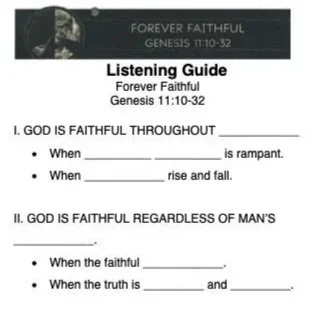
Enhance your sermon engagement with this comprehensive 3-page study resource and listening guide for "Forever Faithful" on Genesis 11:10-32.
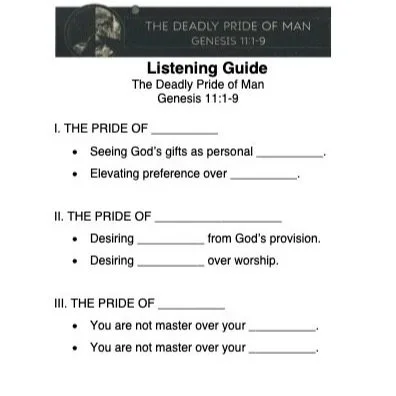
Enhance your sermon engagement with this comprehensive 3-page study resource and listening guide for "The Deadly Pride of Man" on Genesis 11:1-9.
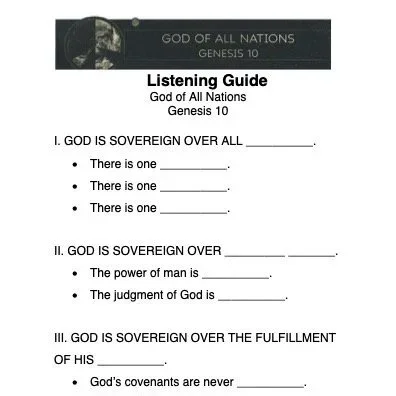
Enhance your sermon engagement with this comprehensive 3-page study resource and listening guide for "God of All Nations" on Genesis 10.
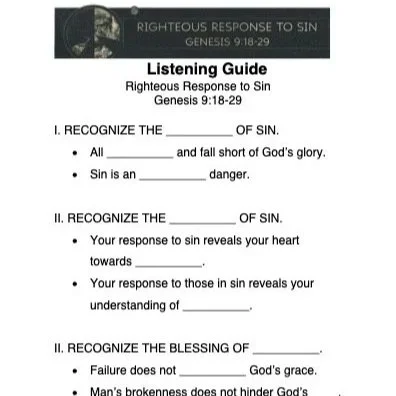
Enhance your sermon engagement with this comprehensive 3-page study resource and listening guide for "Righteous Response to Sin" on Genesis 9:18-29.
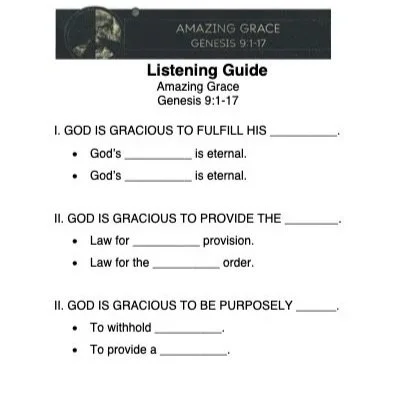
Enhance your sermon engagement with this comprehensive 3-page study resource and listening guide for "Amazing Grace" on Genesis 9:1-17.
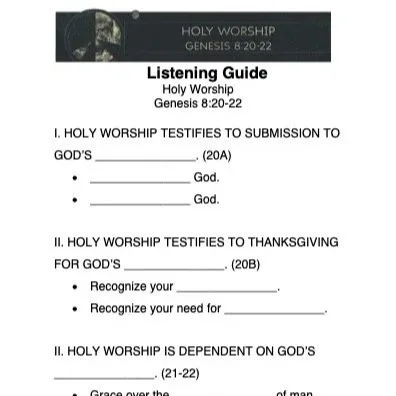
Enhance your sermon engagement with this comprehensive 3-page study resource and listening guide for "Holy Worship" on Genesis 8:20-22.
Jesus gives sobering warnings in Mark 9:38–50. Do not hinder those whom God is using. Do not cause little ones to stumble. Do not let anything in this world draw you into sin.
This sermon considers the seriousness of sin, the reality of hell, and the call for God’s people to live as salt in the world.